Upcoming Events

BeTONt (2): (Neu)Beginn - Musik nach den Trümmern

Die einzigartige Baugeschichte der Kapelle “Madonna in den Trümmern” haben CoGNiMUS zu einem circa einstündigen Kammerkonzert inspiriert, das im Bezug auf die Verwandlung von Vorhandenem in etwas Neues musikalisch der Frage nach geht: Womit wird gebrochen, was bleibt erhalten? Ein Trio aus Cello, Flöte und Stimme spielen ein intimes Konzert, das sich um das für diese Besetzung zentrale zeitgenössische Werk temA von Helmut Lachenmann dreht.
Credits:
Ingvill Statle Skjørten (Gesang), Francesco Marzano (Flöte), Rebekka Stephan (Violoncello)

BeTONt (1): Stabat Mater
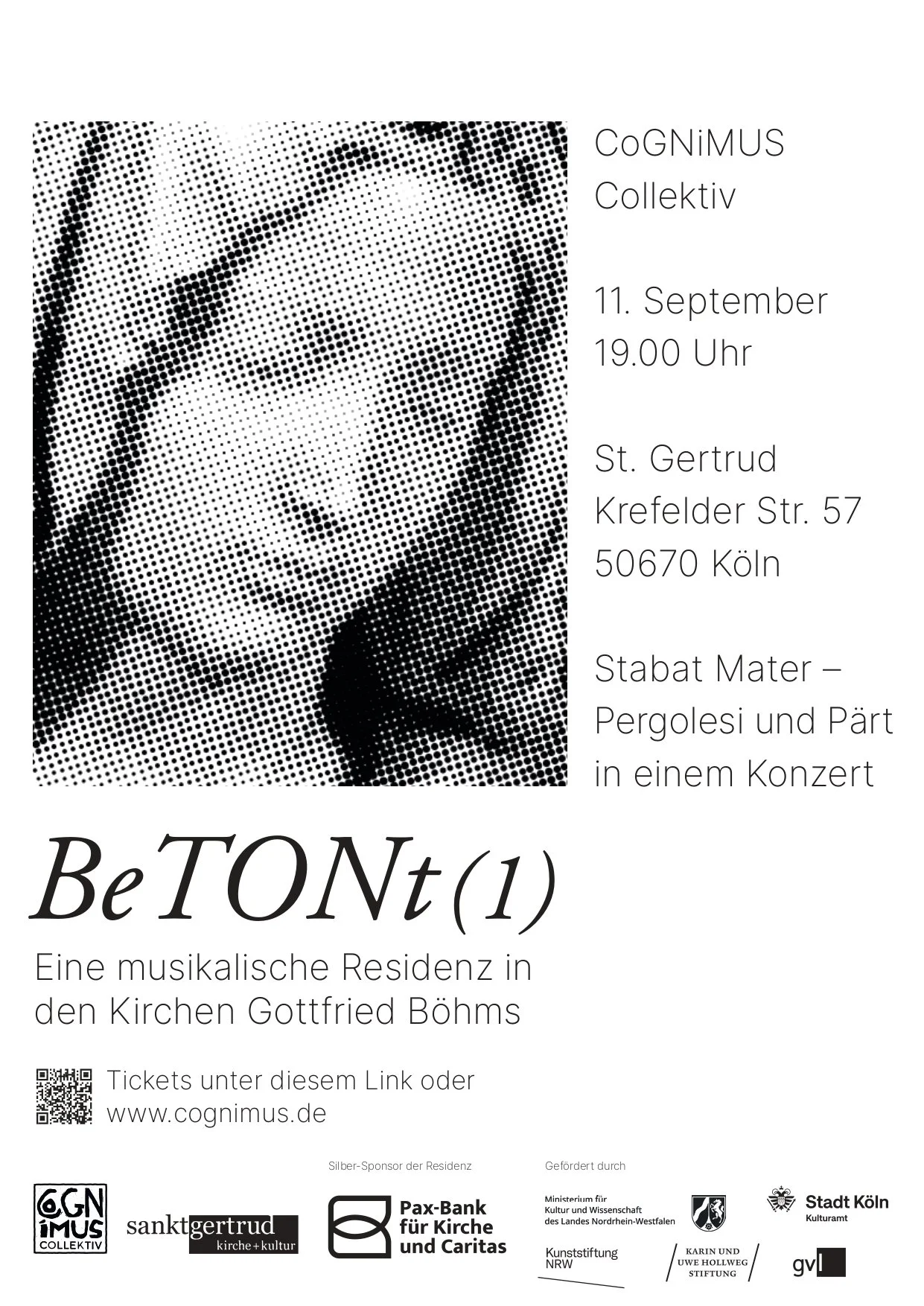
Im Rahmen von BeTONt, der Konzertresidenz von CoGNiMUS in von Gottfried Böhm entworfenen Kirchen in Köln, präsentiert CoGNiMUS BeTONt I: Stabat Mater – ein Konzerterlebnis rund um Pergolesis und Pärts Stabat Mater.
Die Konzertreihe 2026/27 findet in sakralen Räumen statt, die vom Kölner Architekten Gottfried Böhm entworfen oder umgestaltet wurden, und vereint fünf Konzerterlebnisse, die jeweils eigens für ihren jeweiligen Aufführungsort konzipiert sind. Die Auftaktproduktion wird in Sankt Gertrud Kirche + Kultur im Kölner Agnesviertel präsentiert. Im Zentrum des Programms stehen zwei sehr unterschiedliche Vertonungen des mittelalterlichen Stabat Mater: Giovanni Battista Pergolesis Werk aus dem Jahr 1736 und Arvo Pärts Komposition von 1985.
Die rund 70-minütige Aufführung setzt die beiden Werke in einen direkten Dialog miteinander. Pergolesis barocke Vertonung für Sopran, Alt, Streicher und Basso continuo trifft auf Pärts reduzierte Fassung für drei Stimmen und Streichtrio. So begegnen sich zwei musikalische Sprachen, die fast 250 Jahre voneinander trennen, in ihrer Auseinandersetzung mit demselben Text und dessen zentralem Bild: Eine Mutter, die um ihr verstorbenes Kind trauert.
Anstatt die beiden Werke als konventionelles Doppelprogramm zu präsentieren, hat CoGNiMUS eine szenisch angelegte Aufführung um sie herum entwickelt. Die Produktion betrachtet Trauer dabei nicht nur als religiöses Thema, sondern als eine universelle menschliche Erfahrung, die kulturelle und religiöse Identitäten überschreitet.
*Das Konzert beschäftigt sich mit Trauer und dem Verlust eines Kindes durch Krieg, Gewalt oder andere Schicksale, was sowohl in einem Film als auch in der Live-Performance durch eine trauernde Mutter dargestellt wird.
Programm
Arvo Pärt:Stabat Mater (1985) für Sopran, Alt, Tenor und Streichtrio
Giovanni Battista Pergolesi:Stabat Mater (1736) für Sopran, Alt, Streicher und Basso continuo
Musikalische Leitung: Yorgos Ziavras
Video & Regie: Panos Zygouros
Sopran: Nina Koufochristou
Countertenor: Luca Segger
Tenor: Merlin Wagner
Performance: Michaela Winterstein
Mit dem Ensemble des CoGNiMUS Collektiv
Credits
Projektmanagement: Katja Lasser, Rebekka Stephan
PR & Kommunikation: Jay Raissis
Grafikdesign: Felix Fastenrath
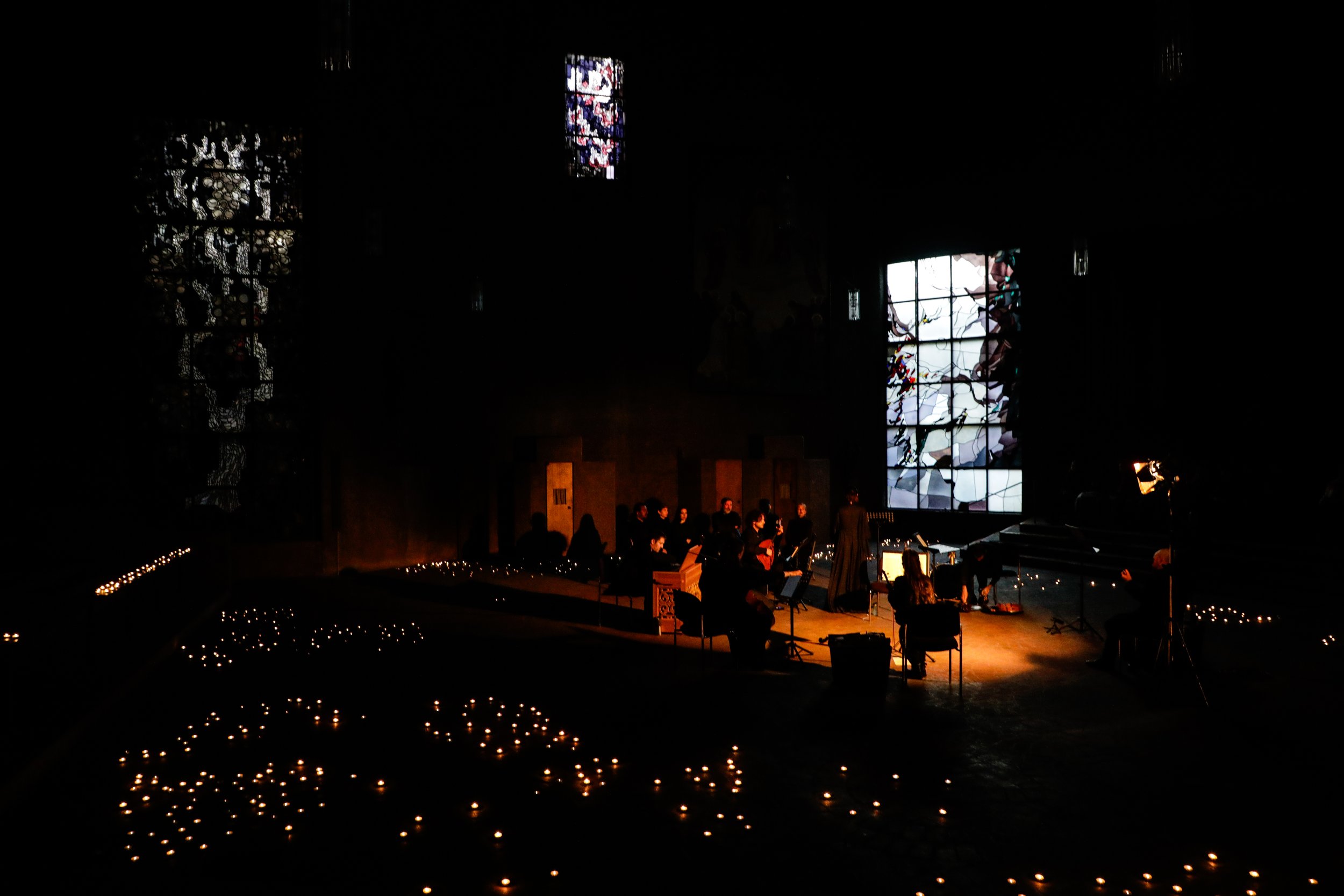
MOIROLÓI | A Transcultural Lament
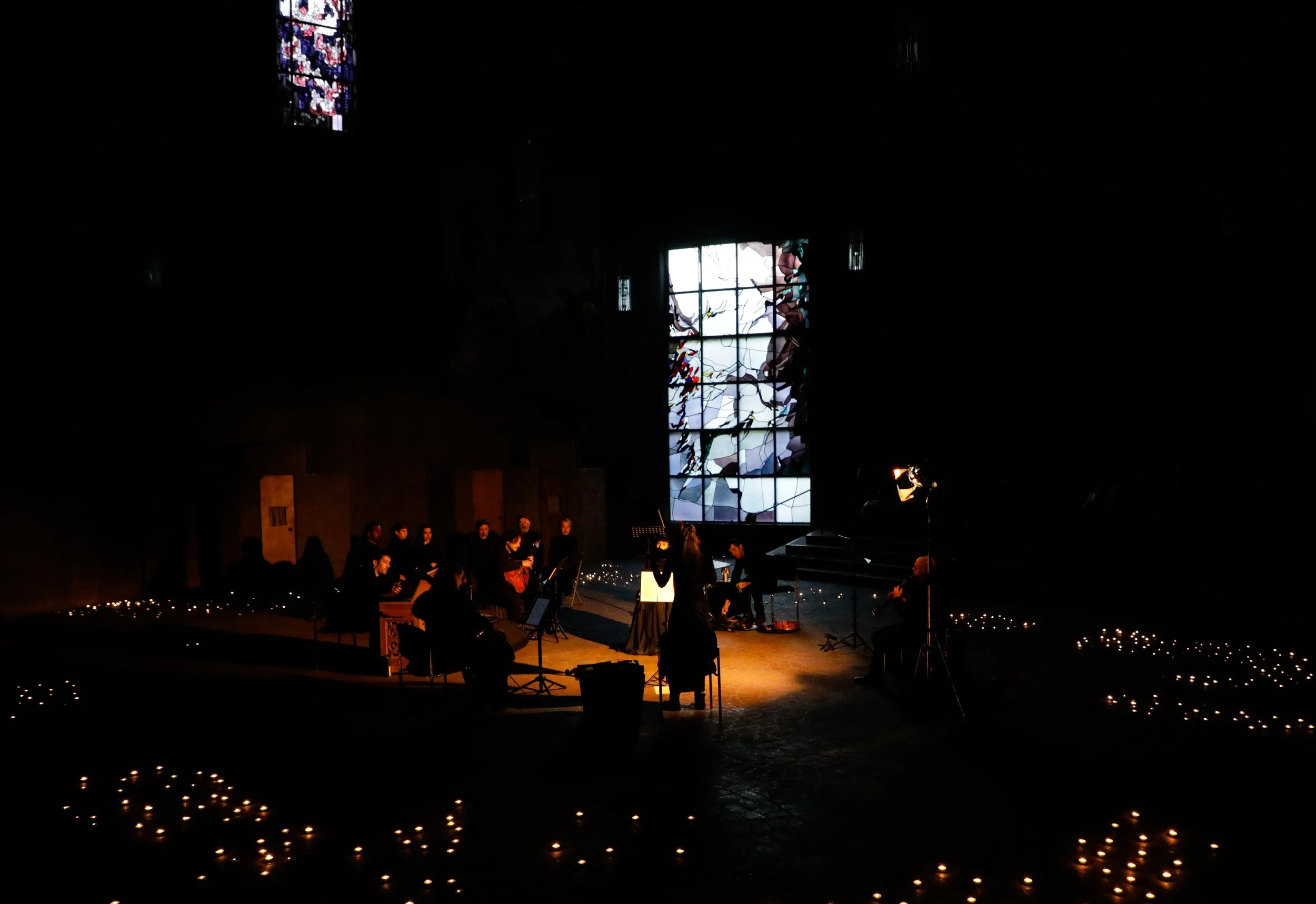
MOIROLÓI delves into the traditional Greek lament of the same name - an exclusive musical form originating from the mountains of Epirus in Northern Greece. This genre becomes a poignant exploration of grief, its lyrical narratives addressing both the deceased and those who stay behind.
In a harmonious fusion, moirolói is combined with various forms of musical lament of the so-called “western art music”, offering a transcultural approach to the universal themes of grief and the haunting echoes of mortality.
The musical concept contrasts the polyphonic epirotica lamenti, moirolói being part of this genre, and monophonic elements of the baroque and renaissance art music, such as pieces by John Dowland and Henry Purcell.
A group of five soloists from Greece performs in versatile ensembles vocal as well as instrumental variants of moirolói, whereas two singers and a continuo group, all of them being based in the NRW area, perform the baroque and renaissance music.
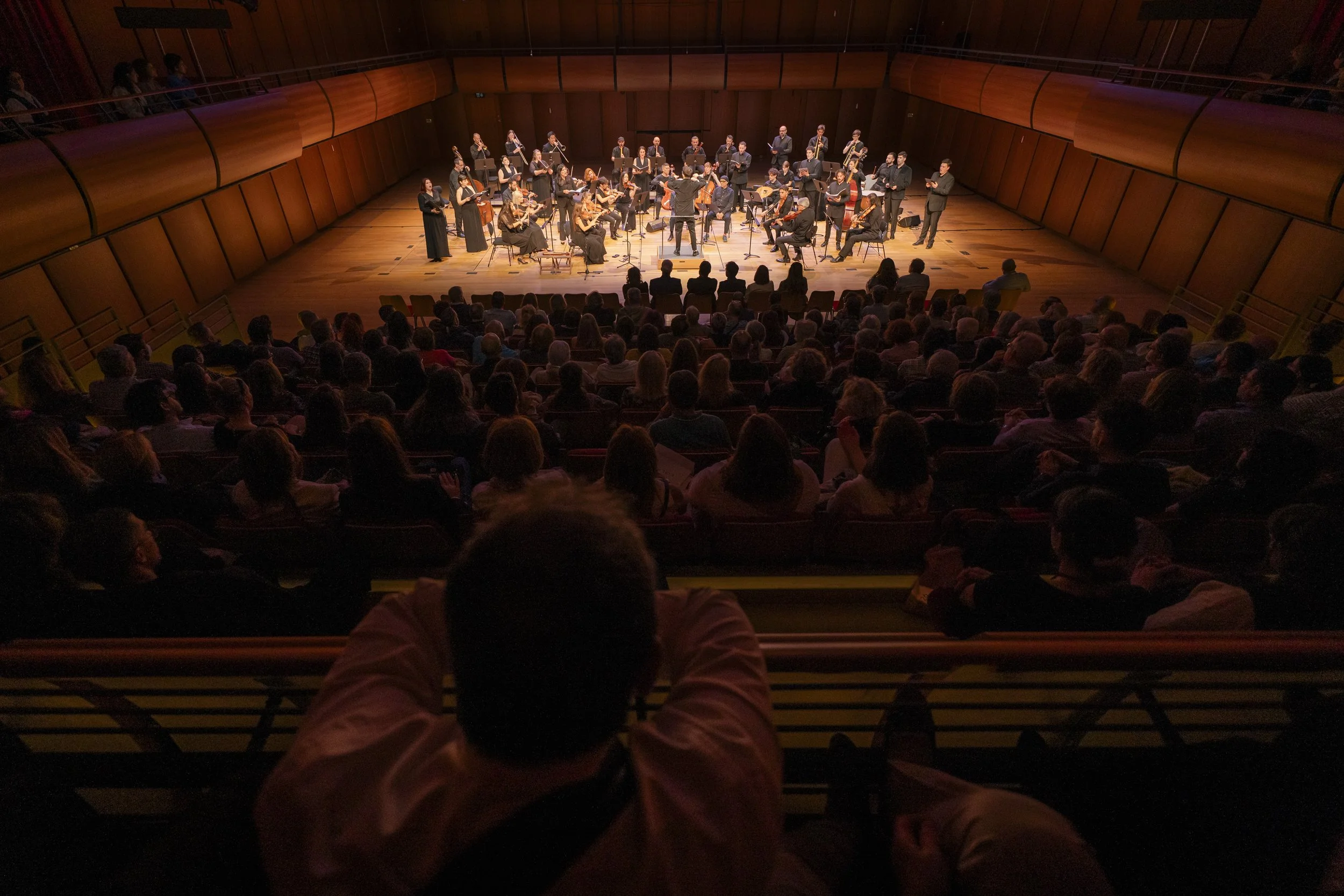
An ingenious arrangement within the room makes all musicians merge to one versatile body of sound and allows the audience to immerse in the sound.
The brutalist architecture of the St. Gertrud church in Cologne – a place of cultural communication – offers unique spatial and acoustic conditions for an unforgettable concert experience.
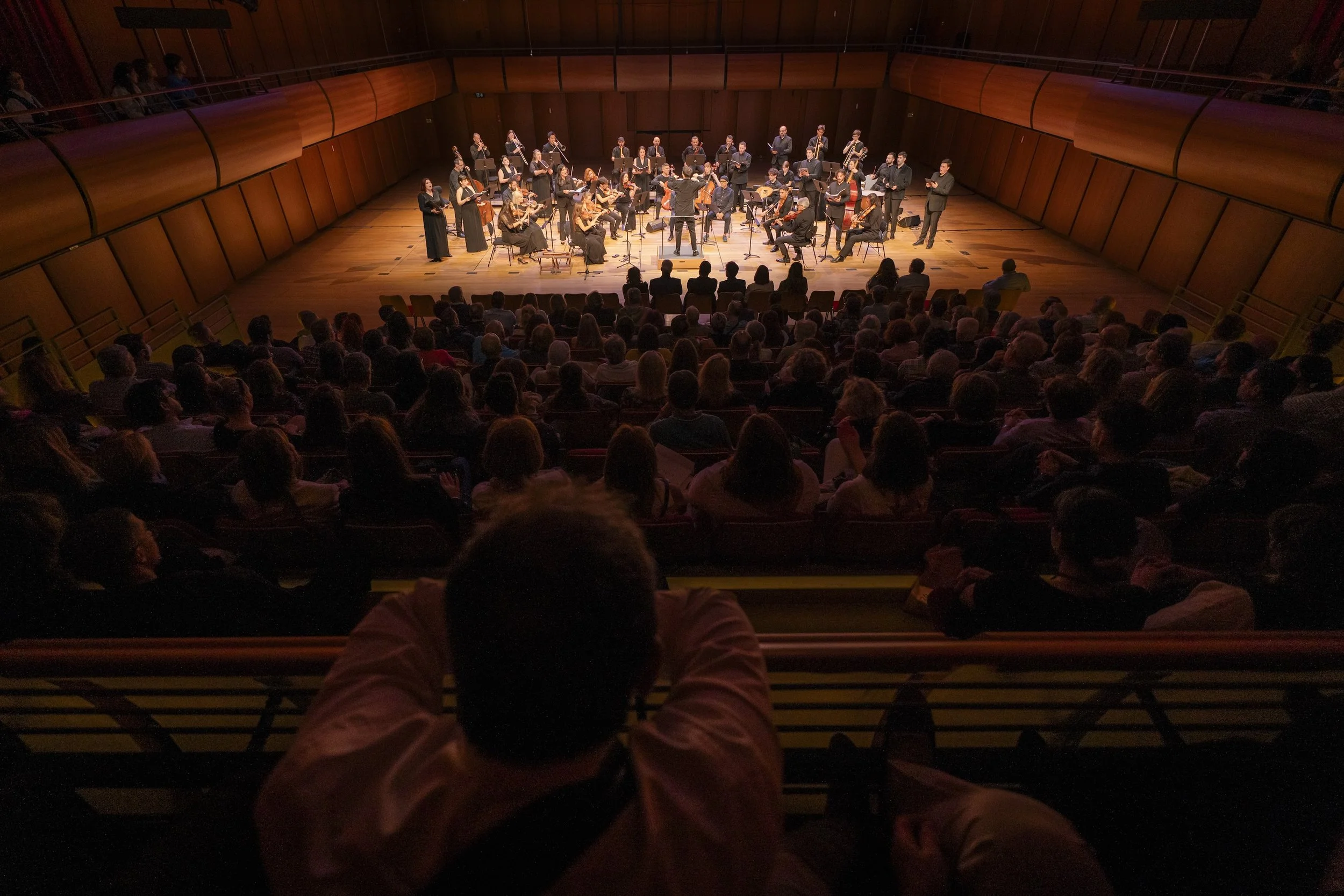
MOIROLÓI | A Lament for the Living

How does death sound, not for the dead, but for the living?
MOIROLÓI is a purely musical narrative focusing on lamentation and funeral rituals. One of the monumental European musical masterpieces, Wolfgang Amadeus Mozart’s Requiem (KV 626) crosses paths with the 19th-century dirges of Epirus.
The ”unfamiliar match” of these two musical worlds, combined with elements from the English Renaissance, early Baroque (Doland, Purcell, Handel), and the Byzantine melos, creates a transcendental sound experience that transforms the ritual of death into a celebration of life. MOIROLÓI draws inspiration from Danse Macabre, the ceremonial texts of the Christian Orthodox Funeral Service, and ancient Greek dirges in modern instrumental and vocal arrangements, which can still be heard in the mountains of Epirus.
Under the baton of Yorgos Ziavras, musicians from different cultural backgrounds join their forces. Greek musicians specializing in traditional folk music, a chorus of singers from across Europe, and instrumentalists hailing from Greece and abroad, all come together to form the orchestra.
CREDITS
Conductor: Yorgos Ziavras
Performers:
Sopranos Nina Koufochristou, Marianna Nomikou, Dimitra Kotidou
Mezzo-sopranos Artemis Bogri, Elena Marangou, Maarja Purga
Tenors Alexandros-Andreas Hazapis, Andreas Karaoulis, Leon Wepner
Basses George Iatrou, Guillem Batllori Pagès, Christos Rammopoulos
Voice Yorgos Merantzas
Concertmaster Katerina Hadjinikolaou
Violin I Veronique de Raedemaeker, Eudjen Zhibaj, Zoe Pouri, Vassilis Soukas
Violin II Kostas Panagiotidis, Angeliki Kasda, Nicolas Beis, Julia Selalmazidi
Viola Stelios Papanastassis, Mischa Smirnov, Elias Sdoukos
Cello Dimitris Travlos, Rebekka Stephan
Double bass Nikos Tsoukalas
Violone Dimitris Tigas
Clarinet Ι Konstantinos Tzekos
Clarinet ΙΙ Till Müller
Bassoon Ι Yannis Evangelatos
Bassoon ΙΙ Dimitris Dakovanos
Trumpet I Dimitris Gogas
Trumpet ΙΙ Katja Lasser
Trombone Ι Andreas-Rolandos Theodorou
Trombone ΙΙ Julia Fischer
Trombone ΙΙΙ Masafumi Sakamoto
Percussion (soloist) Marinos Tranoudakis
Lute Ptolemeos Armaos
Organ Patricia Langermantel
Guests: Savvas Siatras, Polyphonic ensemble Chaonia